




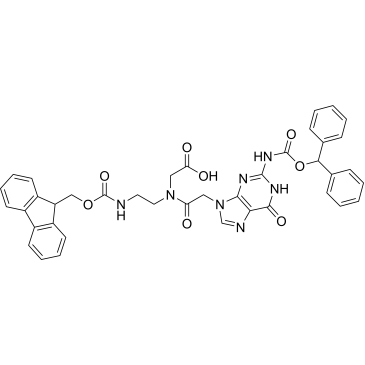
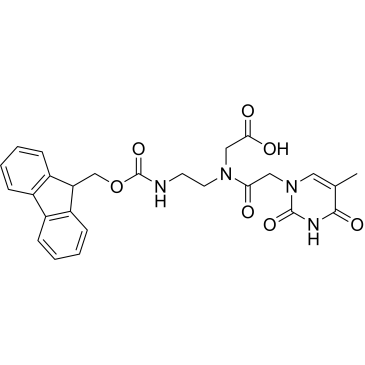
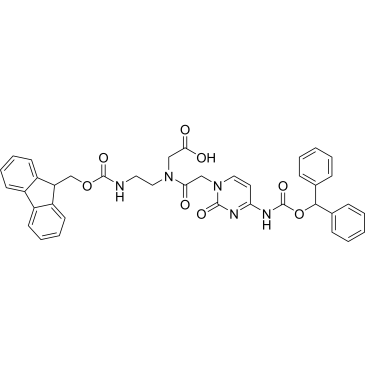
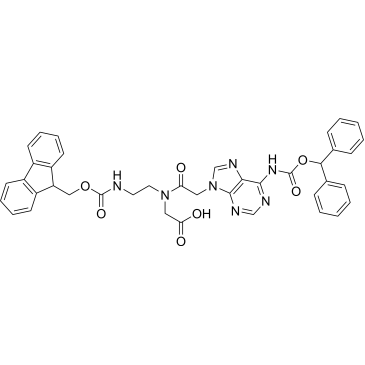
Peptide Nucleic Acid (PNA) Monomers
Peptide nucleic acid (PNA) is a new nucleic acid sequence-specific reagent. Unlike traditional nucleic acids such as DNA and RNA, it replaces the sugar-phosphate main chain with a polypeptide backbone. Its main features and functions are as follows: 1. Unique structure: PNA molecules are composed of multiple amino acid residues connected by hydrogen bonds. Its structure is different from DNA and RNA, and it has a unique double helix structure and spatial configuration. 2. Highly selective recognition: PNA molecules can bind to specific DNA or RNA sequences to form stable complexes. Due to its unique structure, PNA has a higher binding ability to DNA and RNA than traditional nucleic acid probes. 3. Non-radioactive labeling: Compared with traditional radioactive labeling methods, PNA can be labeled by non-radioactive methods such as chemical synthesis, avoiding the potential harm of radiation to the human body. 4. Good stability: PNA molecules are stable in aqueous solution, do not undergo photolysis, hydrolysis and other reactions, and can be stored and used for a long time.
Technical Resources
-
1
 1
Catalytic asymmetric Friedel–Crafts alkylation of unprotected indoles with nitroalkenes using a novel chiral
1
Catalytic asymmetric Friedel–Crafts alkylation of unprotected indoles with nitroalkenes using a novel chiralChiral chloro-indeno pybox has served as a new ligand for the Yb(OTf)3-catalyzed asymmetric Friedel–Crafts alkylation reaction of indoles with nitroalkenes. The tunable nature of pybox ligands
-
2Catalytic asymmetric Friedel–Crafts alkylation of unprotected indoles with nitroalkenes using a novel chiral
-
3Catalytic asymmetric Friedel–Crafts alkylation of unprotected indoles with nitroalkenes using a novel chiral
-
4Catalytic asymmetric Friedel–Crafts alkylation of unprotected indoles with nitroalkenes using a novel chiral
-
5Catalytic asymmetric Friedel–Crafts alkylation of unprotected indoles with nitroalkenes using a novel chiral
Related Classifications
- Methylated Nucleosides
- Protecting Agents for Hydroxy and Amino Groups
- Phosphorylating Agents, Phosphorothioating Agents
- Coupling Activators, Condensing Agents
- Riboses, 2'-Deoxyriboses
- Sulfur Transfer Reagents
- Protected Nucleosides
- Nucleoside Phosphoramidites
- Base Modified Nucleosides and Nucleotides
- 2'-O-Methylribonucleosides