




Siloles
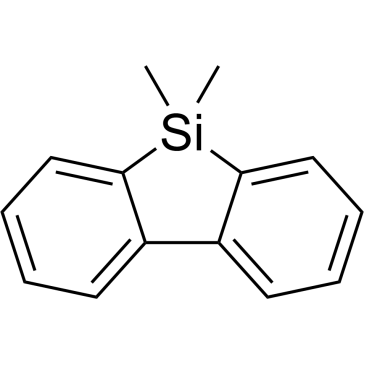
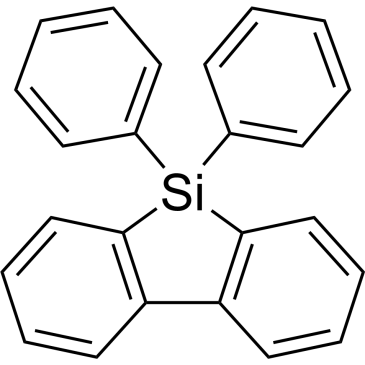
Siloxanes are heterocyclic compounds containing silicon atoms in the ring, usually bonded to carbon and oxygen atoms. They exhibit unique electronic properties, including high electron affinity and low reorganization energy, making them suitable for n-type semiconductors. Silicon can form stable free radicals, which contributes to their high electron mobility and makes them attractive for use in organic transistors. Their ability to be functionalized allows for tuning of their optical and electronic properties, enabling their use in a variety of optoelectronic applications. Siloles have found application in OLEDs, OFETs, and organic photovoltaics, helping to improve device performance and stability.
Technical Resources
-
1
 1
Catalytic asymmetric Friedel–Crafts alkylation of unprotected indoles with nitroalkenes using a novel chiral
1
Catalytic asymmetric Friedel–Crafts alkylation of unprotected indoles with nitroalkenes using a novel chiralChiral chloro-indeno pybox has served as a new ligand for the Yb(OTf)3-catalyzed asymmetric Friedel–Crafts alkylation reaction of indoles with nitroalkenes. The tunable nature of pybox ligands
-
2Catalytic asymmetric Friedel–Crafts alkylation of unprotected indoles with nitroalkenes using a novel chiral
-
3Catalytic asymmetric Friedel–Crafts alkylation of unprotected indoles with nitroalkenes using a novel chiral
-
4Catalytic asymmetric Friedel–Crafts alkylation of unprotected indoles with nitroalkenes using a novel chiral
-
5Catalytic asymmetric Friedel–Crafts alkylation of unprotected indoles with nitroalkenes using a novel chiral
![9,9'-Spirobi[9H-9-silafluorene]|CS-0168364](https://file.chemscene.com/productPIC/CS-0168364.gif)
Related Classifications
- Anthracenes, Anthraquinones
- Benzimidazoles
- Benzofurans
- Benzothiadiazoles and Analogs
- Biphenyls
- Carbazoles
- Carbolines
- Fluorenes, Fluorenones
- Naphthalenes
- Small Molecule Semiconductor Building Blocks (Others)
- Perylenes
- Phenanthrenes
- Phenanthrolines
- Phenylpyridines
- Pyrenes
- Pyrimidines
- Secondary Arylamines
- Terphenyls
- Tertiary Arylamines
- Tetraphenylethylenes
- Thiophenes
- Triazines
- Triphenylbenzenes
- Triphenylenes
- Benzothiophenes